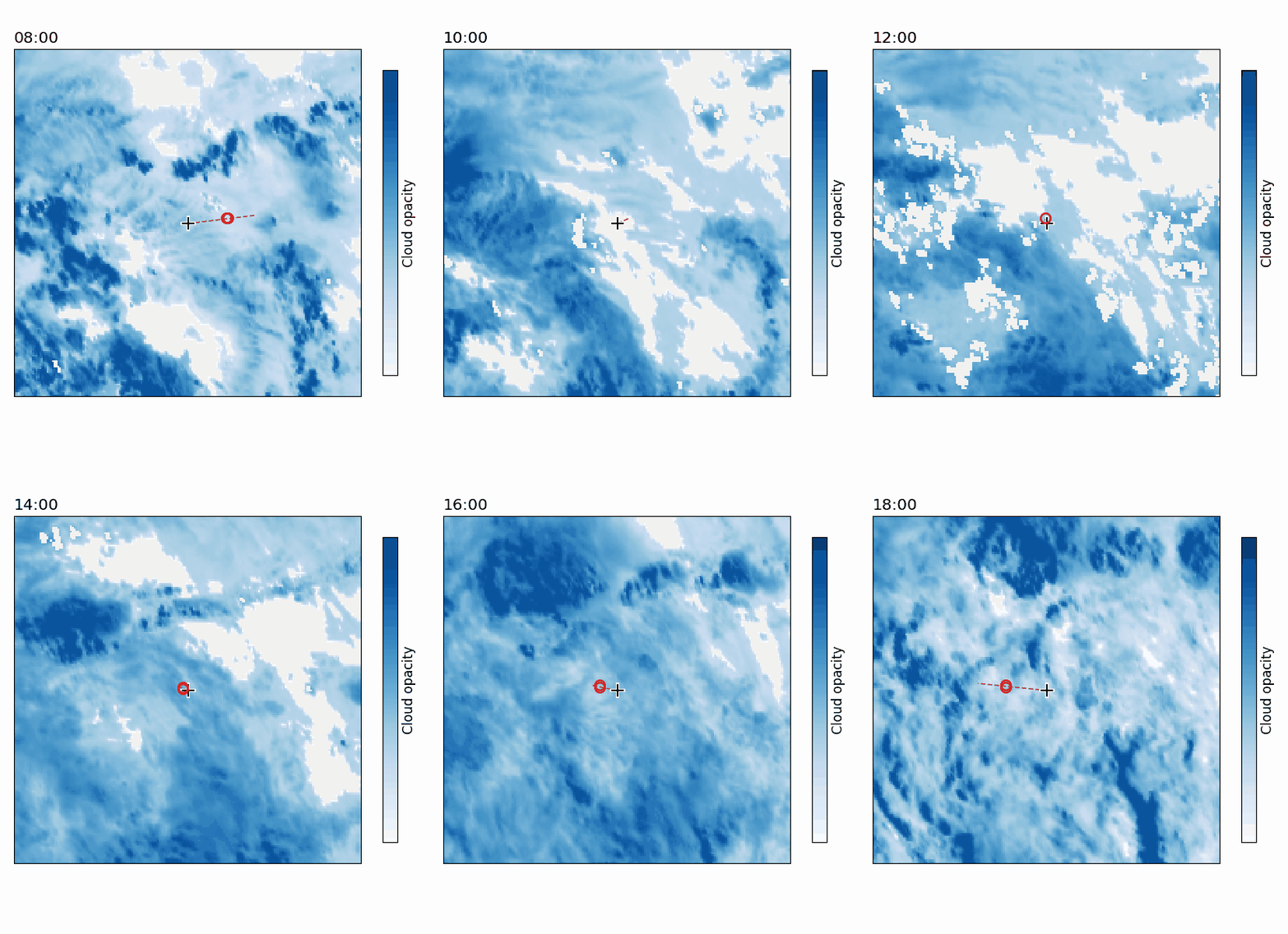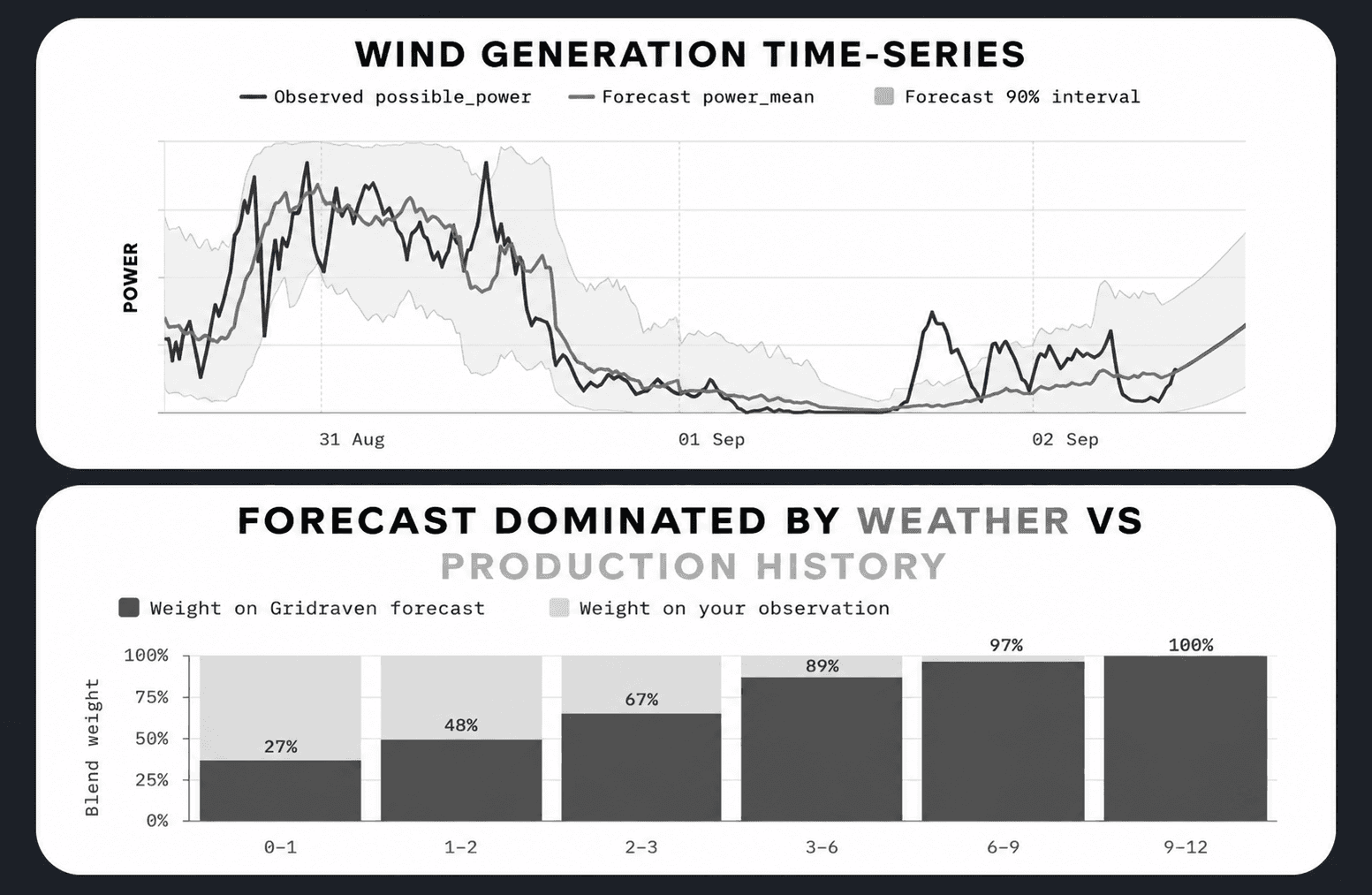
We predict sunshine because sunshine reduces grid capacity by heating up the wires. Transmission capacity is ~5% less on a sunny day than a cloudy day. But we asked the question: could our solar forecast be helpful also for solar PV production?
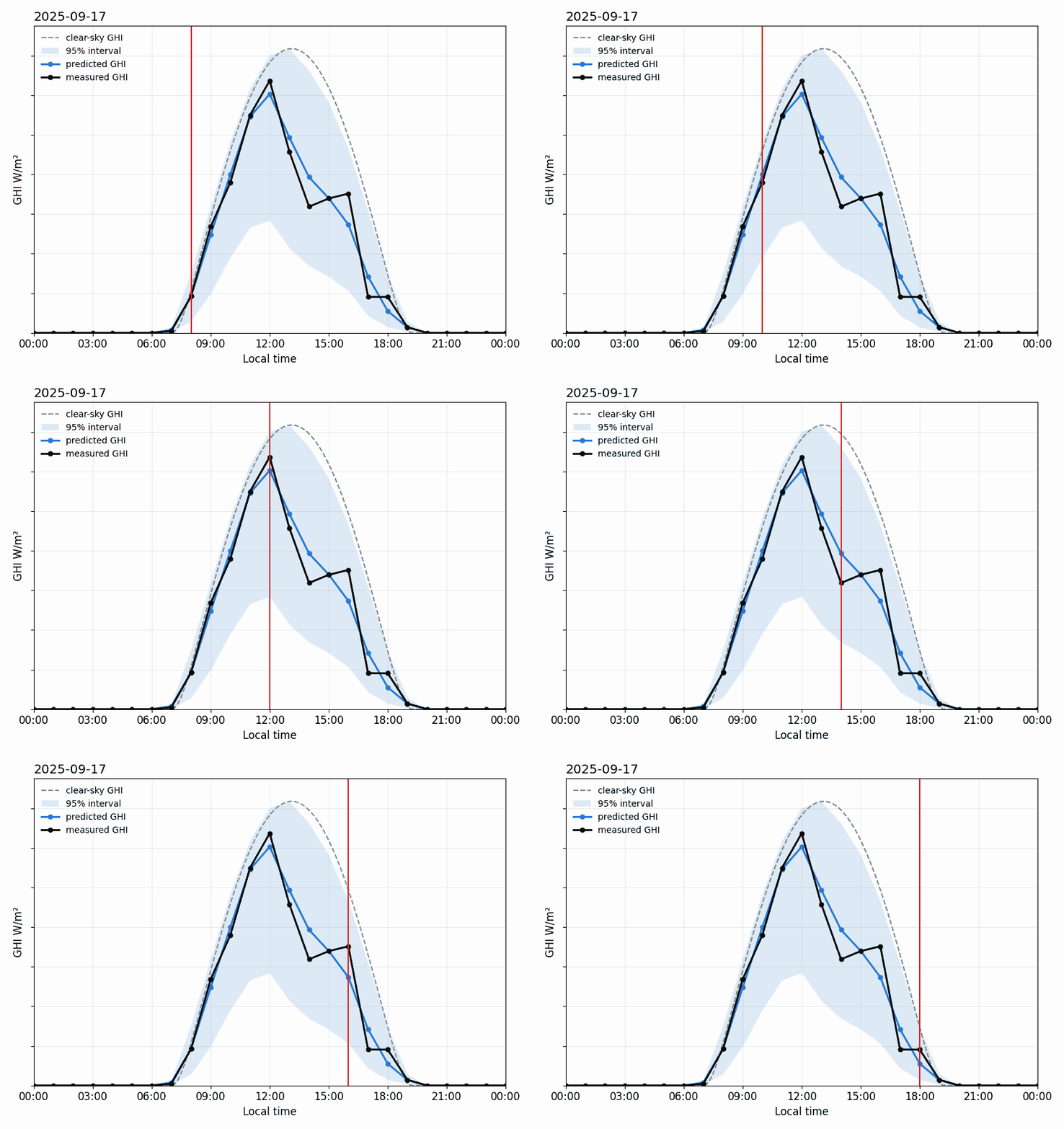
Predicting solar irradiance boils down to two questions: what is the maximum irradiance possible, and what stops part of it from reaching the ground?
The first question is answered by modelling clear-sky GHI, which many people have done before. There are plenty of methods to choose from; some of the more popular ones are Ineichen-Perez, Simplified Solis, Haurwitz, Bird, and REST2. For most use cases, the first three are good enough, and they are easy to use through the popular pvlib library. For our use, however, REST2 gives the best results, even more so with the changes we have made to it.
The second question is harder to answer, and it is where machine learning has helped the most. The obstruction has three main parts: the atmosphere, shading, and clouds.
The atmosphere is already taken into account by the REST2 clear-sky model, which uses a range of parameters that describe the atmosphere and what is in it.
For shading, we reuse the same 1 m elevation data from airborne LIDAR and satellites that we use for wind to build the skyline around each location, and then check when the sun's path is blocked by terrain, trees, or buildings.
Clouds are the hardest part. This is where we apply ML to combine (1) measurements from ground-based weather stations and (2) several satellite products, such as images and cloud property fields, to give the model the context it needs to learn how much sunlight a cloud blocks.
How well does it work? We tested day-ahead power predictions for about 150 of the largest solar farms in ERCOT. There, the error was around 11-12% nMAE (normalised by park capacity), which is very close to ERCOT's own forecast.
This is still an early stage for us, but the results are already promising. We will keep building our solar irradiance machine learning models, and we look forward to sharing more as it develops.